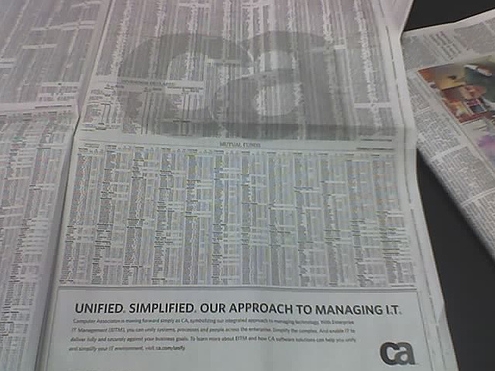
Watermark Ads The New Pop Up

ca_watermark.jpg

Computer Associates is sponsoring the stock pages of The New York Times with a watermark ad. These ad placements are on the rise as yet another method of getting ads seen by readers. Perhaps we should label these watermark ad “news-pops.” After all, just like the dreaded online pop up, these ads appear over edit without user consent. OK, so watermark ads are nowhere near the annoyance level of horrific pop ups but there is a bit of similarity here.


Picture of Steve Hall

Steve Hall

RECENT ARTICLES

TRENDING AROUND THE WEB

People who do their best work in the early morning aren’t more disciplined — for some, it’s simply the one hour before the day has had a chance to talk them out of anything

People who do their best work in the early morning aren’t more disciplined — for some, it’s simply the one hour before the day has had a chance to talk them out of anything

Global English Editing

8 things thoughtful hosts do that guests never notice but always feel

8 things thoughtful hosts do that guests never notice but always feel

Hack Spirit

9 subtle mistakes well-meaning grandparents make without realizing it

9 subtle mistakes well-meaning grandparents make without realizing it

Hack Spirit

Studies on helicopter parenting link the behavior to parents’ own fear of danger and discomfort with separation, complicating the popular idea that constant helping is simply an extension of love

Studies on helicopter parenting link the behavior to parents’ own fear of danger and discomfort with separation, complicating the popular idea that constant helping is simply an extension of love

Global English Editing

A vocabulary that keeps quietly expanding well past someone’s twenties isn’t just a love of words — it’s the one measure of intelligence psychologists have trusted for a century because it tracks so closely with how a person actually thinks

A vocabulary that keeps quietly expanding well past someone’s twenties isn’t just a love of words — it’s the one measure of intelligence psychologists have trusted for a century because it tracks so closely with how a person actually thinks

Global English Editing

An Adobe survey found 69% of workers say emoji use makes a coworker seem more likable — and the reason has more to do with replacing missing body language than making a message friendlier

An Adobe survey found 69% of workers say emoji use makes a coworker seem more likable — and the reason has more to do with replacing missing body language than making a message friendlier

Global English Editing